American Roof Tarping Crew is a roof tarping company serving customers in all 50 states. American Roof Tarping Crew has been in business since 2016. American Roof Tarping Crew employs 82 roofing technicians. American Roof Tarping Crew has tarped over 80,891 roofs across the country. American Roof Tarping Crew tarps more than 13,253 roofs each year. We secure tarps over missing shingles, tree-punctured decking and leaking flat roofs.
American Roof Tarping Crew works with homeowners, property managers and insurance adjusters. Our roofing technicians inspect every damaged roof and provide a written price before work starts. We finish most roof tarping jobs in a single visit. American Roof Tarping Crew schedules appointments Monday through Friday, 8 a.m. to 6 p.m. Contact us for a free quote today.
What Are the Signs Your Roof Needs an Emergency Tarp?
If water is coming through a ceiling, or you can see bare decking from the ground, the roof needs to be covered before the next rain. Don't wait for the adjuster. Insurers generally expect you to take reasonable steps to prevent further damage, and tarping is the standard one. Every hour the roof stays open, water soaks deeper into insulation and drywall, and a straightforward roof claim can turn into a mold job.
- Missing or torn-off shingles
- Exposed decking or underlayment
- Punctures from tree limbs
- Active ceiling leaks
Does an Emergency Tarp Get Nailed Straight Through the Shingles?
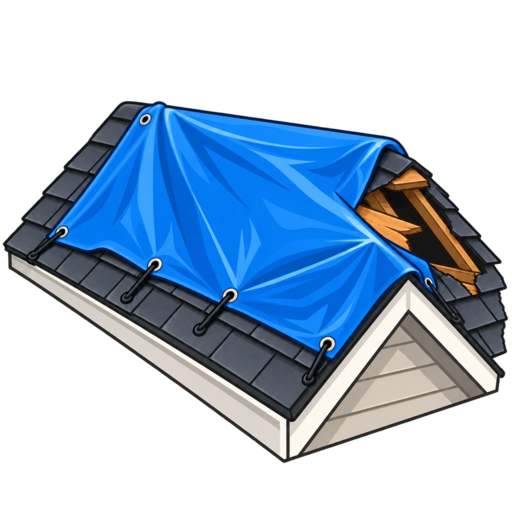
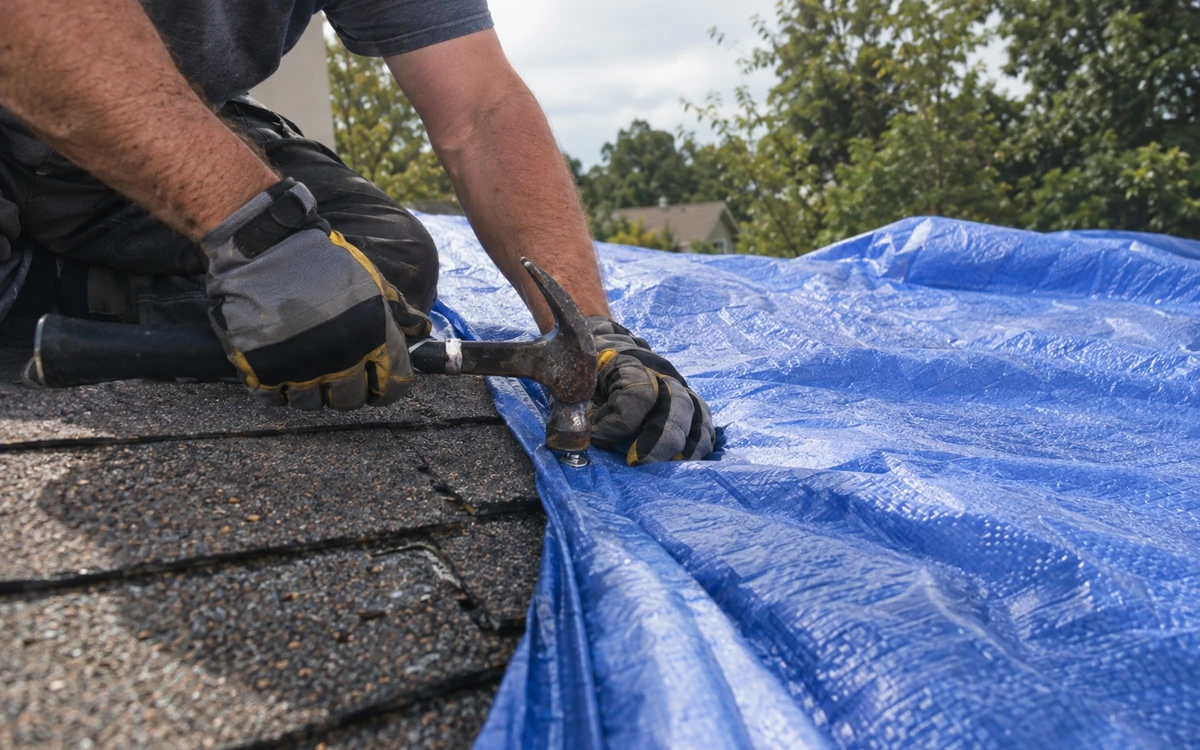
No. We run the tarp up and over the ridge so water can't get under the top edge, then wrap the edges around 2x4 battens and screw the battens down. The batten spreads the load along its full length, so wind can't tear the plastic at each fastener. A heavy-duty polyethylene tarp also lasts far longer on a roof than the thin blue hardware-store kind, which tends to shred in the first real wind.
Why Is Water Still Leaking After the Roof Was Tarped?
Usually water is getting in above the tarp or slipping under a loose edge. If the tarp stops short of the ridge, runoff from higher up flows right underneath it. A lifted batten also lets wind-driven rain blow sideways into the opening. Keep in mind that water already trapped in insulation can keep dripping for a day or two, so a slow drip right after tarping doesn't necessarily mean the tarp failed.
Can a Roof Be Tarped While It's Still Storming?
Sometimes. Light rain is workable on a low-pitch roof with good footing. With lightning, sustained high wind or ice, nobody should be up there: a tarp caught in a gust acts like a sail and can pull a person off the edge. In those conditions, we work inside with buckets and plastic sheeting to contain the leak, then get on the roof as soon as the weather breaks.
How Much Does Emergency Roof Tarping Cost in Texarkana, AR?
Emergency roof tarping in Texarkana, AR typically runs between $247 and $2,131 per job, and the final price comes down mostly to how much of the roof is open and how steep the pitch is. A small patch over a few missing shingles on a walkable ranch roof lands at the low end. Large storm openings on steep two-story homes, after-hours or same-night calls, and tree limbs that have to be cut away before the tarp goes on all push the cost toward the top of that range.